What If Culture Came Before Currency?
Money moves. Culture decides where. A case for a more culturally intelligent ecosystem.

I've said it time and time again. We've underestimated the power of the global majority. We've underestimated how much is missing from the fintech narrative when we leave culture out of it. And the more I sit with this, the more I believe culture matters more than currency.
I'm not talking about FX rates or the mechanics of cross border payments. I'm talking about something harder to build for. I'm talking about the complexity of who we are.
Culture means more to us than currency does. It shapes how we save, who we save with, what we save for, and who we trust with our money long before an app or a bank ever enters the picture. So why don't we talk about it enough in fintech?
Underneath our tagline, Fintech for the Culture, is the real work we're on a journey to uncover: that we, as human beings, are culturally driven, including in how we handle our finances. Product teams can map a user journey. They cannot map a family's obligations, a community's expectations, or the invisible rules passed down about who you send money to first and why.
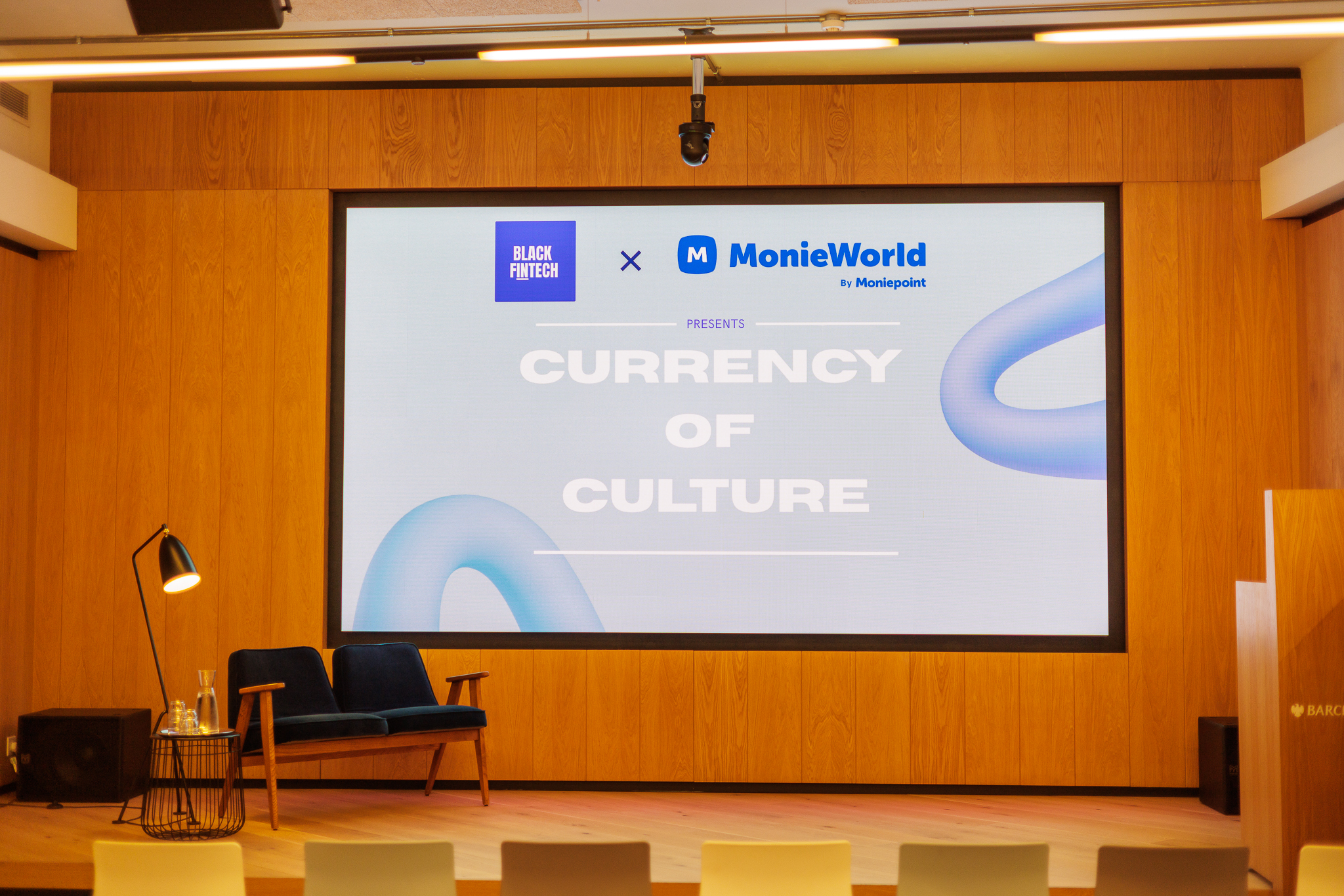
This is the thinking behind Currency of Culture, our summer social and debate night, hosted at Barclays Eagle Labs. We brought together diaspora from several backgrounds, different financial realities, different starting points, different practices, all part of the global majority, to debate what money and culture actually mean to us. Because as a community, this is one of the biggest opportunities fintech hasn't tapped into yet.
The conversation we started
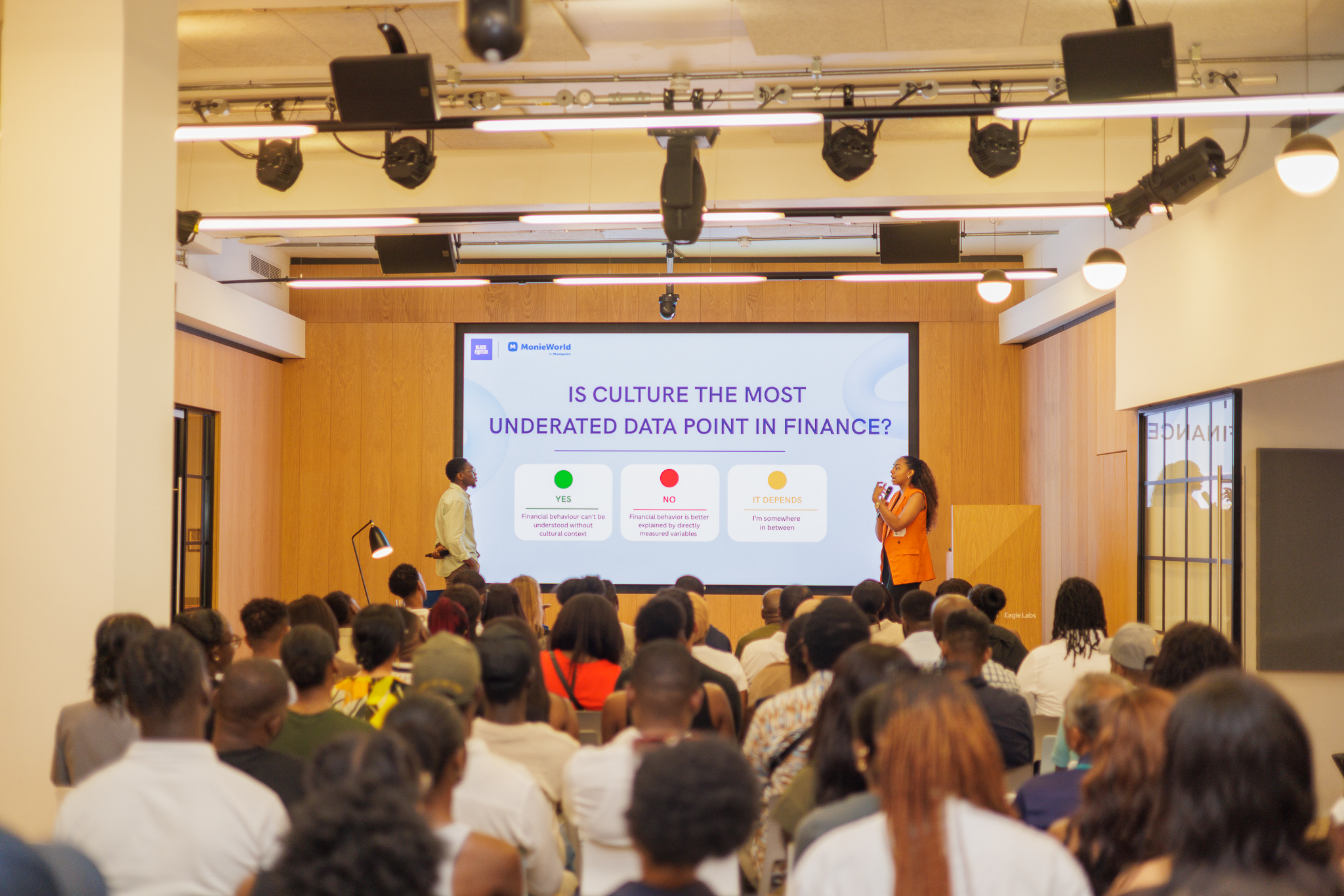
Currency of Culture wasn't a panel talking at people. It was a debate, hosted by Adellet Sarkis and Abdulhafeez Babatunde, a full house of diaspora from different backgrounds and different financial starting points, voting with red, yellow and green cards on questions that cut right to the heart of diaspora banking, culture and financial behaviour.
People don't leave their culture at the login screen.
And that showed in every single question we put to the room.
Should fintechs build locally or globally?
Mixed reviews, across the board. Some argued for building globally from day one, chasing ambition and scale. Others argued for winning one market properly before expanding. A good number landed somewhere in between: it depends on the business's goals and the actual needs of the customers it's trying to serve. There's no universal answer here, and the data backs that up. Africa's most credible diaspora fintechs, the ones now processing over a billion dollars a month, didn't start global. They went deep in one market, built trust and infrastructure, then expanded outward once the model was proven.
Is culture the most underrated data point in finance?
Again, a genuine split. Some in the room argued that financial behaviour can't be understood without cultural context. Others pushed back, arguing that financial behaviour is better explained by measurable variables, the numbers you can actually put in a model. A good number sat in between: culture clearly matters, because our practices around money differ so much from household to household, but it's genuinely hard to measure, especially across communities that are themselves a mix of cultures.
There's real evidence for the first camp. Research into Esusu and Ajo, the rotating savings and credit systems that predate modern fintech by generations, shows these informal networks still bridge the financial inclusion gap for people locked out of formal banking, women in particular, roughly 30% of adult women globally remain excluded from formal financial systems. These systems work because they're built on trust and belonging, not credit scores. That's a cultural data point with a measurable outcome. It's just one the industry has never known how to capture.
Should products adapt to culture, or should culture adapt to financial best practice?
This was one of the liveliest debates of the night. Some argued financial products have always developed around culture, our saving circles and money practices are proof of that, and it's the products that need to catch up. One sharp example raised on the night: back home, birthday traditions often flip the Western norm entirely, with the birthday person treating everyone else rather than being treated. That's a small window into how much culture already shapes what a financial product needs to account for, long before a developer writes a line of code.
Others argued the opposite: that principles like saving and investing outweigh any individual culture when it comes to actually building wealth, and culture should bend toward what works. Both sides had a point. The truth is probably that the best products don't force a choice between the two.
Is financial behaviour learned, or designed?
The room split cleanly here too. Some argued you learn your financial behaviour through your culture and upbringing, passed down before you ever open a bank account. Others argued it's designed, shaped by the specific products you encounter and the expectations they set. Realistically, it's both. Culture gives you the starting instincts. Product design either respects them or overrides them.
Are some communities better at building wealth, or just better at building it differently?
The final question, and maybe the most honest one. One point that stuck with the room: wealth itself might be too subjective and too community-specific a concept to fairly benchmark across cultures in the first place. Esusu, Ajo, Susu and Stokvel are proof that entire communities have been building financial resilience for generations through systems the formal sector doesn't recognise as wealth-building at all, because they don't look like a pension or a portfolio. Research on diaspora finance increasingly agrees that remittances and community savings could shift from pure consumption support into genuine investment vehicles, if the industry built the right products to receive them. The wealth was already being built. It just wasn't being counted.
Where the answer is already being built
This is exactly the gap MonieWorld by Moniepoint, our headline sponsor for Currency of Culture, has been building into. It's a useful case study for almost every debate we had that night.
Take the local versus global question. Moniepoint didn't start in the UK. It built deep in Nigeria first, as TeamApt, growing into a platform now processing over $250 billion annually for more than 10 million businesses and individuals, and reaching profitability at unicorn scale, a rare feat in fintech anywhere in the world. Only once that foundation was proven did it expand into the UK with MonieWorld, built specifically for the Nigerian diaspora sending remittances back home. Global ambition, built on local proof. That's not a hedge between the two camps in our debate. It's the actual model.
Then take the culture as data point question, and the wealth question. MonieWorld isn't positioning itself as just another remittance app chasing speed and fees. Moniepoint's CEO, Tosin Eniolorunda, has spoken about building a proper immigrant banking platform, one that helps people manage obligations back home while building financial stability here, with credit building tools designed for people the formal system has historically struggled to score. That's a company reading culture as a genuine input, not an afterthought, and building products around a version of wealth that starts with the diaspora's actual financial life rather than a borrowed definition of it.
The room debated whether culture is the missing data point in finance. MonieWorld is one of the clearer signals yet that the companies willing to build for it are the ones who'll define what comes next.
That's the standard the rest of the industry now has to meet. Not faster transactions. Products built by people who understand why the money is moving in the first place.
With gratitude,
Valerie Kontor
Founder, Black in Fintech
References
- World Bank / African Development Bank remittance estimates, cited in "African Remittances and Diaspora Fintech: The USD 100 Billion Lifeline," All Business Africa, 2026.
- "Africa's Quiet Lifeline: Diaspora Remittances Top $100 Billion," Rio Times, June 2026.
- RemitSCOPE Africa, World Bank remittance data, 2024.
- Business Day / World Bank data on Nigeria remittance inflows, cited in Moniepoint press release, "Africa's Fastest-growing Fintech Moniepoint Enters UK Market With Launch of MonieWorld," Moniepoint Blog, April 2025.
- "Moniepoint Launches Remittance Solution, Enabling UK Customers to Send Money to Nigeria," The Fintech Times, April 2025.
- "MonieWorld: Moniepoint's foot in the door for diaspora remittances," Techpoint Africa, April 2025.
- "Moniepoint bags $200m Series C to expand financial inclusion," Fintech.Global, October 2025.
- "Informal financial savings practices to facilitate formal financial inclusion," World Journal of Advanced Research and Reviews, January 2026.
- "Esusu is Innovating an Ancient African Saving Method," AfroTech, 2019.
- "What Is a Susu (aka Sou-Sou)? A Guide To Susu Savings," Clever Girl Finance, 2026.
- "Esusu (Nigeria)," Global Informality Project.
- "Rethinking remittances: the overlooked billions sustaining African households," ISS African Futures, August 2025.